
ChatGPT Empty Room: Art-Direct a Room Around Your Interests
Use ChatGPT Empty Room as a prompt-writing game: build a room around chosen interests, then compare two lighting briefs with a reusable rubric.
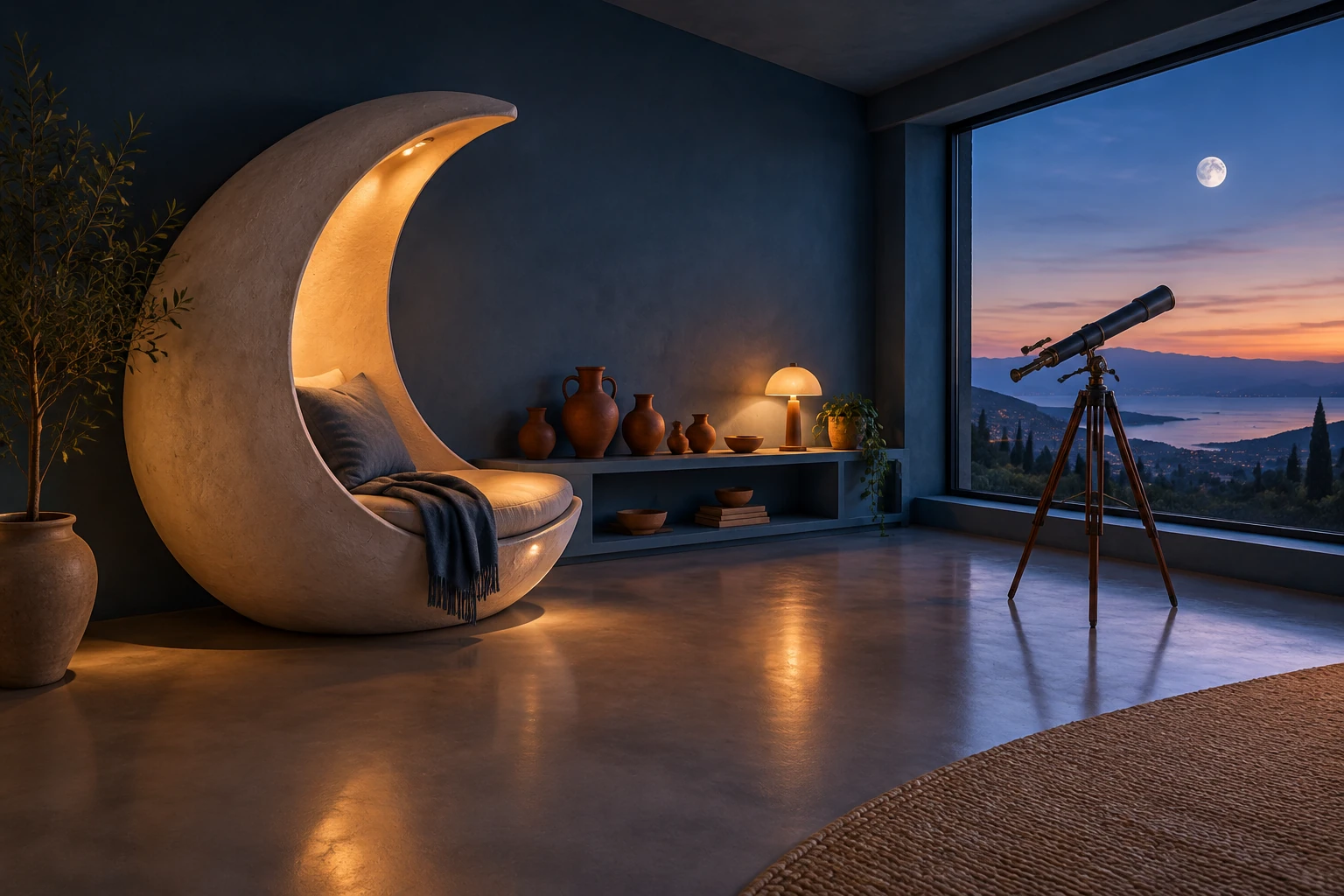
A ChatGPT Empty Room prompt can turn interests you choose—such as astronomy, ceramics and rainy-day reading—into a room with a clear visual point of view. Treat it as a creative prompt game, not a personality test: you supply the interests, decide what they mean visually, and direct the imaginary space. This guide builds one reusable art-direction sheet, then changes only its lighting to make two comparable variants.
What's new on this page
- 2026-11-13 — Published this guide with an original room brief, two lighting treatments, a comparison rubric and a one-change revision plan.
Start with objects, not a personality label
Imagine a fictional resident who loves looking at the night sky, making pottery and reading while rain taps the window. Rather than asking an image tool to infer a personality, translate those voluntarily chosen interests into visible objects:
- Astronomy: a modest telescope near the window and a small moon chart.
- Ceramics: a few handmade clay vessels, with varied but related shapes.
- Rainy-day reading: a well-used chair, a book and a window marked by rain.
Choose a hierarchy before writing the prompt. The chair and the view make the room readable at a glance; the telescope and pottery support the story; the chart and book are quieter details. If every object demands equal attention, the scene can feel like a catalogue. Leave an uncluttered patch of floor or wall, too. Negative space gives the main shapes room to register and helps keep the scene calm.
Art-direction sheet: one room, two treatments
Copy this complete brief into your chosen image tool, then use one lighting treatment below. Keep the room, objects, composition and camera direction unchanged when comparing them.
Complete prompt: “Create an editorial interior illustration of a fictional reader’s room shaped by three chosen interests: astronomy, handmade ceramics and rainy-day reading. Show one comfortable reading chair beside a broad rain-streaked window, with a modest telescope angled toward the night sky, a small moon chart, an open book, and three handmade clay vessels on a low shelf. Make the chair and window the dominant forms; let the telescope and vessels read clearly as supporting objects. Keep the floor and one wall area open, with no extra clutter. Use a coherent wide interior view from a fixed eye-level camera at the doorway, looking diagonally toward the window and shelf; keep the same perspective and object positions across lighting variations. Thoughtful, personal, lived-in, not luxurious or staged as a showroom. No people, text, labels or logos.”
Treatment A — Amber reading light: Add a warm pool of lamplight over the chair and open book. Keep the window and telescope in cool blue twilight, with soft contrast between the cozy reading area and the darker sky. Let the pottery catch a restrained amber edge.
Treatment B — Cloudy window light: Use cool, diffuse light from the rain-streaked window as the main illumination. Add only a faint warm glow from a small reading lamp, leaving the room gentle and low-contrast. Keep the clay vessels’ natural warmth visible without making them glow.
The treatments describe different proposed briefs, not generated results or performance findings. Their purpose is to make a useful choice between two moods while retaining the same visual ingredients.
Keep variants comparable
Use this written rubric after reviewing each proposed direction. Judge each item as clear, partial or unclear, and note one specific observation rather than giving the scene an overall, unexplained score.
| Check | What to look for |
|---|---|
| Object hierarchy | Do the chair and window read first, with the telescope and vessels as supporting details? |
| Negative space | Is at least one area of floor or wall open rather than filled with decoration? |
| Interest cues | Can you identify the astronomy, ceramics and reading objects without relying on labels? |
| Lighting distinction | Does the amber treatment feel warmer, and the cloudy treatment cooler and more diffuse? |
| Camera consistency | Are the doorway viewpoint, wide perspective and object positions held steady? |
A fixed camera angle matters because it helps you compare the lighting rather than accidentally comparing two different layouts. If one version moves the telescope or switches to a close-up, differences in emphasis may come from composition, not illumination. Bring the review back to the prompt: did you ask for both treatments to use the same viewpoint and placements?
Revise with one change at a time
Choose the most important unclear rubric item and make one explicit edit. For example, if the window overwhelms the chair, revise only the hierarchy sentence: “Keep the window broad but make the reading chair the largest foreground form.” Leave the lighting, objects and camera instructions untouched for that comparison. In a later revision, you could adjust a different issue, such as asking for a larger patch of bare floor. This one-change plan makes your creative decisions easier to track; it does not promise a particular image outcome.
Use the brief in your tools
ChatGPT supports image requests and reference images; manage memory separately in settings. For this exercise, provide the visual brief directly rather than assuming any stored context. Official image-generation guidance · Official memory guidance.
At Highsfield, start with the AI image prompt tool and paste in the self-contained brief, including your chosen lighting treatment. The brief should travel with you between tools: don’t rely on one tool remembering what you entered elsewhere. If you want to develop a separate moving-scene idea, adapt the room’s visual direction into a distinct prompt with the AI video prompt tool. Before any paid task, check the current model and quote in the relevant interface; don’t assume a particular cost or amount of included use.
If you want to bring in a reference, use only one room photo you own, with no people or private documents visible. Describe what should stay in place—such as the window, chair or shelf—but treat the image as a source of direction, not a promise of exact reconstruction. You can also continue exploring prompt ideas in the Highsfield blog.
The finished brief is intentionally specific but adaptable. Swap the chosen interests, translate each into a few visible objects, set their hierarchy, and preserve the camera while testing a single change. That gives you a practical way to art-direct a room that feels personal because of what you chose to show.