
20 Gemini AI Motorcycle Photo Prompts for Cinematic Continuity
Use these 20 original Gemini AI motorcycle photo prompts to build cinematic rider images with visual continuity from wide establishing frames to tight details.
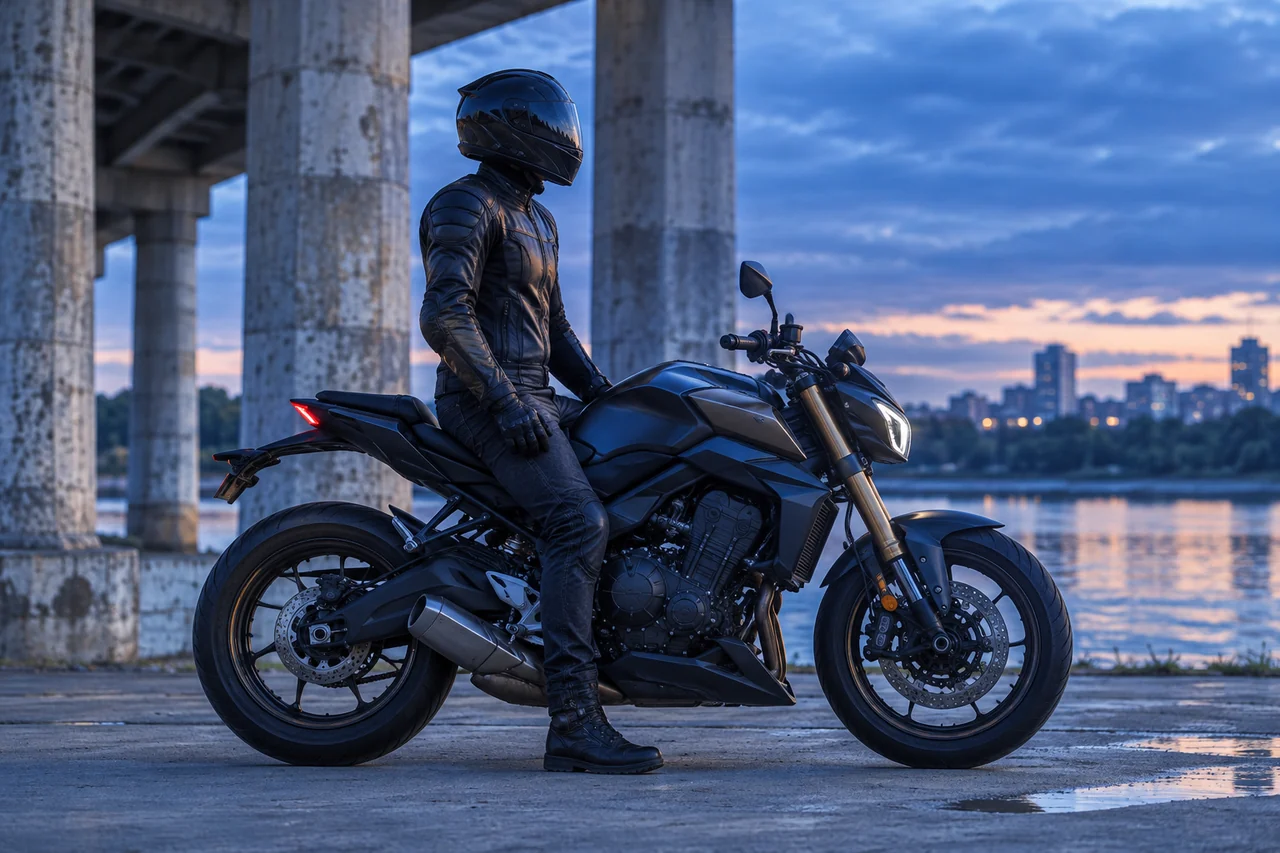
A convincing motorcycle image sequence is more than a set of dramatic angles: the rider, bike, lighting, and location need to feel as though they belong in the same scene. These 20 Gemini AI motorcycle photo prompts offer frames from wide views to close details. Pick one scene and repeat its rider, bike, and lighting details to build a continuous sequence. Each prompt calls for a safe, stationary or controlled pose, with no brand logos or extreme stunts.
Google’s guidance for image prompts recommends specifying the subject, composition, action, location, style, and any constrained edits. Google’s Gemini image-generation prompting tips provide that framework; they do not establish that Highsfield runs Gemini or guarantee a particular result. Treat the prompts below as starting points, and check each generated image for continuity and visual errors.
Set up a continuous scene
Before generating, choose a visual anchor to repeat: for example, “fictional adult rider in a matte charcoal full-face helmet, rust-red jacket, dark gloves, and black riding trousers; unbranded graphite touring motorcycle.” Add the same weather, time of day, and location to each prompt in a sequence. The examples below use varied scenes, so repeat one prompt’s identifying details when building a single set.
A useful reusable edit syntax is: “Keep [identity and scene details] unchanged. Change only [one requested element]. Preserve [composition, lighting, and other constraints].” For example: “Keep the adult rider, charcoal helmet, rust-red jacket, graphite motorcycle, rainy harbor setting, and camera position unchanged. Change only the framing to a tighter three-quarter view. Preserve the overcast light and realistic proportions.” This makes the requested edit explicit rather than asking for a wholly new image.
For a three-shot sequence at the same rainy harbor with the rider and motorcycle above, start with a wide shot beside the loading ramp. Then frame the same parked bike and rider from three-quarter view. End on the gloved hand at the handlebar, with the same soft harbor light and raindrops on the graphite tank. Keep the helmet, outfit, and setting in all three prompts.
20 prompts, from wide to tight
-
Wide establishing frame — mountain overlook: Create a cinematic, photorealistic wide establishing photograph of a fictional adult motorcyclist in a matte charcoal full-face helmet, rust-red riding jacket, dark gloves, and black trousers, standing beside an unbranded graphite touring motorcycle parked securely at a mountain overlook. Frame the rider and motorcycle small against layered peaks at cool dawn; calm pose, natural light, no logos, no text, no traffic danger.
-
Wide roadside frame — desert: Photograph a fictional adult rider in a cream full-face helmet and olive textile suit beside an unbranded black motorcycle, parked on a broad gravel pullout in a high-desert landscape. Use a distant, expansive composition, late-afternoon side light, and long quiet shadows; the rider stands clear of the road, no logos, no text, no stunt.
-
Wide city frame — rain: Make a cinematic wide street photograph of a fictional adult rider wearing a dark full-face helmet and a muted yellow waterproof jacket, seated upright on a stationary unbranded motorcycle at a legal curbside parking space. Wet pavement reflects soft city lights; keep the rider and bike readable within the urban environment, with no visible brand marks or unsafe traffic interaction.
-
Wide forest frame — mist: Show a fictional adult rider in a matte green full-face helmet and dark protective gear standing beside a parked, unbranded adventure motorcycle at a forest turnout. Compose the misty trees as the dominant subject, with the rider and bike in the lower third; quiet overcast light, safe position, no logos.
-
Wide coastal frame — sunset: Create a broad cinematic photograph of a fictional adult rider in a white full-face helmet and navy riding suit beside an unbranded silver motorcycle parked on a paved coastal overlook. Place the ocean horizon behind them at sunset; wind moves only the jacket fabric slightly, no riding action, no logos, no text.
-
Medium-wide frame — garage: Photograph a fictional adult rider in a black full-face helmet and slate protective jacket seated upright on a stationary unbranded motorcycle inside a clean, modest workshop. Show the full bike and some workshop context, practical overhead lighting, neutral documentary-cinema color, no logos or readable signs.
-
Medium frame — roadside pause: Frame a fictional adult rider in a burgundy helmet and charcoal riding gear standing beside an unbranded motorcycle at a safe, paved roadside rest area. Show the rider from knees up and most of the bike, with distant hills softly visible; relaxed posture, natural late-day light, no logos.
-
Medium frame — checking a map: Create a realistic medium shot of a fictional adult rider wearing a full-face helmet and protective blue jacket, stationary beside a parked unbranded motorcycle at a designated rest stop. The rider looks down at a folded paper map held safely off the bike; hands and map are clear, no phone screen text, no logos, no road obstruction.
-
Medium frame — helmet visor: Photograph a fictional adult rider in a matte black full-face helmet and tan riding jacket beside a parked, unbranded motorcycle. The rider gently adjusts the closed visor while standing still; medium three-quarter framing, soft cloudy daylight, natural hands, no logos or text.
-
Medium frame — studio portrait: Make a cinematic editorial portrait of a fictional adult rider in a white full-face helmet and dark protective suit, standing next to an unbranded motorcycle against a charcoal studio backdrop. Include the rider from waist up and the bike’s upper profile; controlled softbox-style light, restrained contrast, no logos.
-
Three-quarter frame — headlight detail: Create a three-quarter photograph of a stationary, unbranded graphite motorcycle with its fictional adult rider in a charcoal helmet and rust-red jacket standing beside it. Emphasize the front lamp, handlebar, and rider’s upper body in soft dawn light; keep mechanical parts plausible, no brand marks, no motion effect.
-
Three-quarter frame — profile and landscape: Show a fictional adult rider wearing a cream helmet and olive protective suit beside a parked unbranded motorcycle, framed from the rider’s knees upward with the bike in side profile. Use the same high-desert pullout and late-afternoon light as a wider companion image; realistic scale, no logos.
-
Three-quarter frame — rain reflections: Photograph a fictional adult rider in a dark helmet and muted yellow waterproof jacket beside a parked unbranded motorcycle on a wet city curb. Frame the rider, tank, and front wheel together; subdued reflections on the pavement, believable water behavior, no readable signage or logos.
-
Three-quarter frame — forest detail: Create a close three-quarter image of a fictional adult rider in a matte green helmet and dark protective gear standing beside an unbranded adventure motorcycle at the same misty forest turnout. Focus on the rider’s gloved hand resting lightly on the handlebar and the instrument area; natural hand shape, no readable display text, no logos.
-
Tight portrait — helmet and shoulders: Make a cinematic tight portrait of a fictional adult rider wearing a matte charcoal full-face helmet and rust-red jacket, shoulders turned slightly toward camera. Keep the visor closed and reflective but not mirror-like; soft dawn light, mountain overlook softly blurred behind, no logos, no text.
-
Tight portrait — visor reflection: Photograph a fictional adult rider in a black full-face helmet, close on helmet and upper shoulders. Show a subtle, physically plausible reflection of a cloudy sky in the visor, with no duplicated landscape or extra objects; neutral workshop background, soft directional light, no logos.
-
Tight detail — gloved hand: Create a close-up of a fictional adult rider’s gloved hand resting naturally on the handlebar of a stationary, unbranded motorcycle. Include a small portion of the charcoal helmet and rust-red sleeve out of focus; realistic fingers and controls, soft dawn light, no text or brand marks.
-
Tight detail — tank and jacket: Make a cinematic close-up showing the unbranded graphite motorcycle’s fuel tank beside the fictional adult rider’s rust-red jacket and gloved hand. Preserve believable tank contours and a single coherent reflection; shallow depth of field, no logo, no lettering, no extra controls.
-
Tight detail — front wheel: Photograph the front wheel and fork of a stationary, unbranded motorcycle at a mountain overlook, with the fictional adult rider’s boots and lower trousers softly visible nearby. Keep the wheel circular, spokes evenly connected, tire grounded on the pavement, and perspective consistent; no motion blur, no logos.
-
Tight closing frame — rear lamp: Create a close cinematic view of the rear lamp and seat of a parked, unbranded motorcycle, with the fictional adult rider in a charcoal helmet and rust-red jacket softly present in the background. Match the cool dawn mountain-overlook palette; realistic reflections, correct proportions, no duplicate parts, no logos or text.
Quick diagnosis: wheels and reflections
If a wheel looks oval, disconnected, or doubled: ask for a stationary motorcycle, a clear side or three-quarter angle, and a fully visible wheel. Use a constrained edit: “Keep the rider, bike, camera angle, and background unchanged. Correct only the front wheel so it is circular, aligned with the fork, and touching the ground; preserve the tire and spoke design.” If the geometry remains wrong, regenerate the frame rather than layering more changes onto it.
If reflections show impossible objects or duplicate scenery: identify the reflective surface and limit what it should show. Try: “Keep everything else unchanged. Correct only the visor reflection to show a soft, diffuse cloudy sky consistent with the scene; remove duplicated objects and preserve the helmet shape.” Reflections are especially easy to overcomplicate, so simpler instructions are easier to inspect.
A reader-run continuity checklist
Before keeping a frame, check: (1) Is the rider clearly an adult and wearing a helmet? (2) Do helmet, clothing, motorcycle finish, weather, and light match the other frames in the sequence? (3) Are the pose and parking location calm and safe? (4) Are wheels, hands, controls, and reflections physically coherent? (5) Are there any accidental logos, lettering, duplicated parts, or invented details? Make a note of any correction, then request only that edit while locking the rest of the scene.
For readers exploring adjacent creative workflows, Highsfield’s AI image destination is relevant to still-image creation, while its AI video destination is relevant to video workflows. Those links are navigation, not evidence of a specific Gemini integration. The prompt structure and continuity checks here are meant to help you shape and review your own image-generation results.
What's new on this page
- 2026-11-23 — Page published. Added 20 motorcycle image prompts, with composition guidance and practical editing checks.